I've been thinking a bit about pricing strategies for a client. Here's the dilemma:
Do we launch a new product at a high price, then drop the price over time to compensate as popularity decreases?
or
Do we launch a new product at a low price, encourage as many people as possible to buy it, hope for a pile of good reviews and other buzz, then gradually increase the price?
The first option is definitely the most common pricing strategy, but I'm intrigued by the second. Three main reasons:
1. In a marketplace where consumers, professional reviewers, amateur bloggers, and others can easily compare notes and often become excited about (good) new things, getting a lot of early exposure is vital.
2. Properly communicated, an increasing-price strategy is attention-getting in itself.
3. Scarcity and time-limitations are powerful motivators. Potential buyers who are on the fence might be swayed to buy now if they fear a price increase in the near future. It's a standard used car sales tactic and it works.
The main thing swaying us towards the more traditional approach is that the brand is new, not just the product. Can we get enough early buzz to justify a price increase? Will people ignore us regardless of our price point, and be further turned off when they see we're increasing the price of something they haven't even heard of? More importantly for the long term: Will a low initial price create the impression that our entire brand is low-end? (It's not.)
My gut is saying to take a more traditional approach to this first product to establish the brand as exciting, interesting, reliable, premium, professional, etc. Once these attributes are proven to be true, and we've had a chance to gauge the level of interest that a new product can garner, we could move to an increasing-price model.
Friday, February 13, 2009


Tuesday, February 10, 2009
It's a nice change... I guess... Kinda...
Okay, this one isn't "bad branding" so much as "confusing expenditures on a brand's visual identity".
I've noticed lately that some of the local Safeway stores have started changing their logos. Not a small task for such a big chain. There's various signage outside the store, in-store POS displays, packaging, advertising, etc. etc. etc.
I totally respect and appreciate a brand's need to evolve and freshen their visual ID from time to time. But, well, here's the change:
Old logo:

New logo:
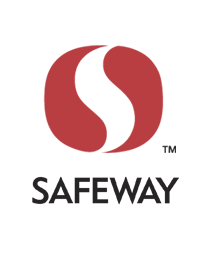
As you can see - massive changes! Will anyone even recognize the new one?
Seriously though, I like the new version, but I wonder why this change is being undertaken. I get the sense that the transition has been going on for a while now, probably a multi-year strategy. But it's probably also the type of thing that could easily be put on hold. Is this really a major priority for the company right now?
If Safeway is continuing with the transition because they're being proactive, attempting to counteract negative perceptions of the overall economy, and trying to appear as the fresh, modern, not-at-all-in-any-danger-of-going-bankrupt supermarket chain, that's great. I applaud them for pushing forward when other brands are retrenching.
On the other hand, I can't help but wonder if they're simply spending money on the rebrand because it's time for one... "The project has started, it's in the budget, so we may as well stay on track". Or worse, because of someone's ego, or some other whim.
I haven't been able to find any public explanation of the change and its timing. I'd love to hear any insight anyone might have.
I've noticed lately that some of the local Safeway stores have started changing their logos. Not a small task for such a big chain. There's various signage outside the store, in-store POS displays, packaging, advertising, etc. etc. etc.
I totally respect and appreciate a brand's need to evolve and freshen their visual ID from time to time. But, well, here's the change:
Old logo:

New logo:

As you can see - massive changes! Will anyone even recognize the new one?
Seriously though, I like the new version, but I wonder why this change is being undertaken. I get the sense that the transition has been going on for a while now, probably a multi-year strategy. But it's probably also the type of thing that could easily be put on hold. Is this really a major priority for the company right now?
If Safeway is continuing with the transition because they're being proactive, attempting to counteract negative perceptions of the overall economy, and trying to appear as the fresh, modern, not-at-all-in-any-danger-of-going-bankrupt supermarket chain, that's great. I applaud them for pushing forward when other brands are retrenching.
On the other hand, I can't help but wonder if they're simply spending money on the rebrand because it's time for one... "The project has started, it's in the budget, so we may as well stay on track". Or worse, because of someone's ego, or some other whim.
I haven't been able to find any public explanation of the change and its timing. I'd love to hear any insight anyone might have.
Sunday, February 8, 2009
Tell Me Why...
... and don't make excuses.
Many brands act like the marketplace, including their customers, must be kept in the dark. I don't know if it's because they don't trust anyone, or that they drastically over-estimate their competitors' capabilities, or some other reason.
My local Petcetera store just closed their doors. With about 48 hours notice.
No explanation, no apology, no easily-accessible information about who to contact with questions or concerns.
The store staff clearly had very little advance warning either -- they were taping up cheap-looking, photocopied "store closing" signs on the second-to-last day. They've been told that a new store will be opening, but have no idea when or where.
Let's assume the company had no choice. Maybe a legal issue requires them to leave. Maybe they're in a dispute with their landlord. Whatever.
Would it be that hard for head office to have a nice-looking poster printed, explaining the situation and apologizing for the short notice and inconvenience?
How about taking a few minutes to write a "cheat sheet" that could be distributed at the checkout, describing what do to in various situations (where to take returns, how to pick up ordered products, alternative locations for incomplete training classes, how to change grooming appointments...)?
I'm not saying they need to tell us everything. I understand the need to keep some things quiet, and the need to coordinate communications. But let's see something.
This is just one example, of course.
I suspect that a lack of communication (even just a simple answer to the question "Why?) is one of the largest sources of bad brand experiences. Think about the last time you were bothered by a brand. It probably had something to do what (and how) they told you something.
Most people are pretty reasonable when they understand your situation. And everyone -- reasonable or not -- at least knows what to do next when they're given more information. This probably saves the brand effort in the long run: who wants to deal with grumpy, confused customers?
So why all the secrets and mystery?
Sure, it's none of my business most of the time, but where's the harm in at least satisfying my curiousity?
And don't get me started on excuse-making...
Take Canadian Tire's recent decision to eliminate e-commerce from their Web site. Baffling most digital marketing professionals, the announcement was made with very little explanation. The reasons giben were, frankly, just vague excuses. Any competent team could (and should have) overcome any of the stated obstacles. So, are they telling us that they're incompetent, or is there something else that they won't open up about?
In either case, wouldn't a greater explanation in the first place be to everyone's advantage?
Saturday, February 7, 2009
Make It (at least a little bit) Personal
Some not-at-all-surprising results of studies by ChoiceStream, Harris Interactive, TNS Global, and TRUSTe:
1. People are more attentive to personalized advertising messages online
and
2. People are concerned about the privacy implications of being monitored online (which is what allows their messages to be personalized)
Nothing really new here. Almost any old-school direct marketer will tell you that mailings with the recipient's name and other personal info will usually get a better response than more generic pieces.
The two challenges are:
1. Getting past the contradiction. People like the results of personalization but not the process.
The solution to this one is education and familiarity. Over time, Internet users will get used to being tracked. The longer they can go without a negative experience, the better. The industry needs to actively educate these users, though. We need to clarify just how much information is monitored, how personally identifiable it is, and the potential ramifications. With a thorough understanding of things like Behavioural Targeting, I suspect that most users will not mind it.
2. Personalizing without scaring anyone. I'm still annoyed by the the number of completely un-targeted, non-personalized advertising online.
Okay, consumers are afraid of BT. Fine.
And many advertisers don't even understand it fully. That's a shame, but acceptable.
So, why not start things slow? You don't have to address your audience "personally", but at least start segmenting into some relevant groups.
How about the simplest, easiest, and one of the most basic things:
Do some geo-targeting, and change your messaging to reflect this -- dynamically serving ads that are relevant to that area... "Fly from Dallas to London for $320!", "Free shipping to Michigan", "Upcoming events in the Northwest"...
It's not difficult, and it has obvious advantages for both advertiser and audience. So why is so much advertising so untargeted (in both media buy and creative)?
Tuesday, February 3, 2009
Anti-Social Behaviour
I'm starting to dislike the term "social media" more and more every day.
First of all, it seems like everybody who uses it considers themselves a "social media expert". No you're not. Enthusiast does not equal expert.
Secondly, it really feels like the flavour of the week. For a while, "banner ads" (another term I dislike -- a banner is just one format within a broad spectrum) were the king. Then e-mail became the sexy online marketing tool. Then SEO. Then SEM. Then Blogs. Then podcasts. And now "Social".
Thirdly, too many people are focusing on the tools rather than the spirit. Facebook is just one social network. Twitter is just one social communications channel. Adding customer comments to an e-commerce site is just one way to enable conversations.
All of these factors combine to create a situation where the true value of consumer-driven decision making, open communication among stakeholders, etc. are lost. Or at least buried under a lot of nonsense, jargon, and expense.
Social media shouldn't be a fad. It shouldn't be identified by a set of tactics.
Here's the thing:
The Internet is inherently social. Actually, even pre-WWW, online communications have been inherently social. Ever since the early days of bulletin boards, Compuserve, AOL, and so on, the main attraction has been sharing and communicating with other users. Discussing brands online is nothing new.
And this goes beyond digital channels.
Good marketing is, and always has been, inherently social. Back when "brand" was, quite literally, a reference to markings on livestock, how did anyone know which brand had which qualities? Simple: by talking to other buyers, sellers, users, etc.
What has changed recently, prompting the excitement over social media for the last couple of years, is that technology has made these converstations easier and more prevalent. The tools are great, but they're only enablers.
We need to make "being social" part of every campaign, product, conversation, and communication. Think of ways to connect people. Think of ways to improve the chances of your message can be spread. THAT is social.
It might mean setting up a YouTube channel or a MySpace page, sure. But it also might mean any number of other tactics, techniques, and methods that don't fall nicely into an existing toolbox.
Friday, January 30, 2009
Is It Worth It?
I love this quote:
It's from an 1970's sci-fi book called The Masters of Solitude. Taken entirely out of context, it applies nicely to my approach to marketing: be as logical, inquisitive, and analytical as possible, but at some point you just have to go with the flow and believe that something is right (or wrong).
The big question, to me, is:
When do you put logic aside and start to believe?
JP examines a couple of recent viral marketing campaigns on his blog.
(One example is the same Honda campaign I linked to in my last post, the other is from T-Mobile in the UK).
In both cases, a pile of money is involved. Maybe not relative to the billions that these particular companies make and spend every year, but it's still a lot of money. I'm sure somebody in Accounting and other departments must have said "Whoa, hold on. Shouldn't we put that cash towards something else? How about some R&D? Or paying off a loan? Or new chairs for the Accounting department?"
Logic says:
Does having a musical road make people any more likely to want a Honda?
Do the thousands of viral video views equate to sales at some point?
What's the cost-per-acquisition for acquiring an incremental wireless subscriber?
What retailer incentives could we put in place for the same cost and effort?
But at some point Belief has to kick in.
Maybe, in the short run, the numbers don't justify staging a stunt.
Maybe, even in the long run, we can't possibly measure the whole emotional impact of doing something fun for our audience.
As professionals, we have a responsibility to ask all the "logic" questions. Fact is, some (I would actually assume most) big, expensive, complicated, creative promo ideas aren't worth the effort or money. We shouldn't do stuff just because somebody's ego thinks it would be a cool idea and might win an award or two.
(Read The End of Marketing As We Know It by Sergio Zyman for plenty of examples of classic campaigns that everyone loves, but could never justify their own existence. )
But, as professionals, we also have a responsibility to recognize that sometimes we don't know all the answers. Sometimes something beautiful is worthwhile simply because it's beautiful. Sometimes, the benefits of a campaign will never clearly and obviously show up in a metrics report, a financial statement, or anywhere else. Sometimes you have to believe that it was worth it.
Logic examines. Belief accepts.
It's from an 1970's sci-fi book called The Masters of Solitude. Taken entirely out of context, it applies nicely to my approach to marketing: be as logical, inquisitive, and analytical as possible, but at some point you just have to go with the flow and believe that something is right (or wrong).
The big question, to me, is:
When do you put logic aside and start to believe?
JP examines a couple of recent viral marketing campaigns on his blog.
(One example is the same Honda campaign I linked to in my last post, the other is from T-Mobile in the UK).
In both cases, a pile of money is involved. Maybe not relative to the billions that these particular companies make and spend every year, but it's still a lot of money. I'm sure somebody in Accounting and other departments must have said "Whoa, hold on. Shouldn't we put that cash towards something else? How about some R&D? Or paying off a loan? Or new chairs for the Accounting department?"
Logic says:
Does having a musical road make people any more likely to want a Honda?
Do the thousands of viral video views equate to sales at some point?
What's the cost-per-acquisition for acquiring an incremental wireless subscriber?
What retailer incentives could we put in place for the same cost and effort?
But at some point Belief has to kick in.
Maybe, in the short run, the numbers don't justify staging a stunt.
Maybe, even in the long run, we can't possibly measure the whole emotional impact of doing something fun for our audience.
As professionals, we have a responsibility to ask all the "logic" questions. Fact is, some (I would actually assume most) big, expensive, complicated, creative promo ideas aren't worth the effort or money. We shouldn't do stuff just because somebody's ego thinks it would be a cool idea and might win an award or two.
(Read The End of Marketing As We Know It by Sergio Zyman for plenty of examples of classic campaigns that everyone loves, but could never justify their own existence. )
But, as professionals, we also have a responsibility to recognize that sometimes we don't know all the answers. Sometimes something beautiful is worthwhile simply because it's beautiful. Sometimes, the benefits of a campaign will never clearly and obviously show up in a metrics report, a financial statement, or anywhere else. Sometimes you have to believe that it was worth it.
Thursday, January 29, 2009
Brand Passion
Do we, as marketers, miss out on the love of brands, the passion, the excitement?
Do we see through too much, or read too deeply?
Check out the comments about Honda here.
Can you imagine a marketer really, truly loving a brand this much?
The amazing fact is: some "regular consumers" really do love brands.
Do we see through too much, or read too deeply?
Check out the comments about Honda here.
Can you imagine a marketer really, truly loving a brand this much?
The amazing fact is: some "regular consumers" really do love brands.
Subscribe to:
Posts (Atom)


